




Making cars that last has become part of Japan’s legacy that the world recognizes. Two brands have led this legacy: Toyota and Honda. Trusted by millions around the world, the question in 2026 is, which is more reliable? The rapidly growing debate of Toyota vs Honda reliability in 2026 is understandable because, after all, consumers want cars that run long without costing too much in repairs. Investing in this debate is important for both the first-time car buyer and the long-time car owner.
Honda offers the sporty feel, while the sporty feel is Toyota’s long-term value and reliability for resale in 2026. Since the two offer different things, it would depend on what someone cares more for in a car: cost of maintenance and durability, or driving experience.
One of Japan’s leading exporters for both toyota vs honda reliability cars is Next Drive. They export used cars across Asia, Africa, and beyond with quality checks. The data they provide on exports shows which brand holds up better. The 2026 Honda CRV and 2026 Toyota RAV4 are great examples of cars for this debate. The right choice can easily save thousands over several years.
Current Market Trend 2026
Japanese car buyers are choosing hybrids and SUVs. The rest of the world has also been changing to avoid high fuel costs due to climate concerns. 2026 sees hybrid SUVs making it to top 10 lists across the globe. The winner in 2026’s top 10 best sellers list in Japan is the 2026 Honda CR-V Sport Touring and the Toyota RAV4 Hybrid. With their hybrid systems, both are fuel efficient and comfortable.
In Japan, trust in the engineering of the Japanese vehicles has high penetration in the Asian, African, and Middle Eastern markets. Long term performance of the cars plays a key role in the preference of Japanese cars over others. The main factors affecting choice are the reliability ratings and the resale value.
Next Drive is a major player in this. They export verified Honda and Toyota cars around the world. Thanks to the stringent inspection of the cars, potential buyers are assured that the vehicles meet the required quality standards.
Toyota vs Honda Reliability 2026 – Engine, Design, and Longevity
Deciding on who has the superior engine of the two – toyota vs honda reliability – may be subjective. Toyota is the winner in the long haul. When it comes to performance tuning, Honda reigns supreme. The fact that both have their own strengths speaks volumes.
With a conservative approach to design, Toyota focuses on the long term. Reliability of the Toyota Camry, which regularly tops reliability rankings, is a case in point. There are numerous documented cases of Toyota engines achieving the 300,000 km milestone with ease. With the more spirited design, Honda engines are more of a responsive sport type. The driving experience of a Honda engine is more lively with quicker acceleration when compared to a Toyota engine. The 2026 Honda CR-V sports a 1.5 liter turbocharged engine. It is a city and highway driving performer.
In mechanical failure rates, Toyota maintains the lead. J.D. Power data ranks Toyota the best, reporting the least number of issues per 100 vehicles. Honda ranks almost equally, but reports more warranty claims in several categories. Regarding long-term performance, data also favors Toyota in most global markets. Their parts are easy to find and inexpensive. Honda parts can be more difficult to find in some export markets, and can impact the long-term cost of vehicle ownership in the first five years. For the 2026 reliability comparison of Toyota and Honda, there is also the consideration of the reliability of their hybrid systems. Toyota has the advantage of experience, as their first hybrid cars debuted in 1997. Though Honda’s hybrid system is newer and found in the CR-V, it is also rated highly.
In regard to design, both brands have clean, modern designs for 2026. Toyota’s designs are more bold and structured, while Honda’s are more fluid and aerodynamic. Yet, both brands’ designs are equally functional. For buyers who have a strong preference for infrequent repair visits, it is prudent to select Toyota. Honda offers a more reliable yet fun experience.
Top 3 Features That Define toyota vs honda reliability
Hybrid systems are the new toyota vs honda reliability measures in 2026. Well-designed hybrid systems integrate seamlessly with the combustion engine and put less strain on it. Both manufacturers have systems which have been well designed and tested.
Low maintenance costs keep long-term ownership expenses low. Toyota manages to pull further ahead because of more international part availability. It makes servicing and maintaining Toyota vehicles easier and cheaper. Toyota buyers will continue to save more in the long run.
The length of a company’s warranty tells you how confident they are in their product. Toyota and Honda have competitive warranties in Japan. Buyers outside of Japan must check with certified dealers, like Next Drive, about the warranties.
Trusting a brand comes with stable resale, and according to export data from Next Drive, across the board, Toyota models have stable resale. Honda models are a close second, especially in the Asia-Pacific region.
Maintenance and Repair Costs
Both brands are cheaper to maintain than the average brand in the USA, but over the last decade, the gap has widened. Aggregated industry data shows that in the first decade of ownership, maintenance and repair costs for Toyota average $5,470 – $6,000, and for Honda, $6,800 – $7,500. Repair costs for the year are similar, but Toyota has a lower likelihood of needing a large repair (15% vs. 20% for Honda). This often means that Honda owners have lower annual repair costs, while owners of Toyota vehicles have fewer costly repairs during high mileage and spend less time in the repair shop.
Resale Value Comparison
Between toyota vs honda reliability and resale value comparisons, Toyota is generally the better of the two. After 5 years, the Toyota Corolla and Camry models have about 62–64% of the original value. This is compared to the Honda Civic and Accord that have about 60–61% of their original value. After 10 years, Toyota‑badged vehicles have an approximate value of 36%, where Honda models are about 29%. This gives Toyota a clear advantage in total depreciation. For many reasons, including resale value, Toyota ranks higher than Honda in 2026 “best resale value” rankings.
Best Reliable Toyota Models in 2026
For 2026, the best reliable and affordable Toyota models on the market seem to be the Toyota Corolla and Corolla Cross models. These are in the mid to upper 80’s with an annual repair cost that is approximately $360–$380. This makes them a great choice for budget buyers. The Toyota RAV4 and Crown these models also score in the mid 80’s and have solid safety ratings and low complaints for these vehicles. The Toyota Sienna, a hybrid minivan, is a family favorite with an “excellent” reliability score and an estimated annual repair cost of $550.
The Most Reliable Honda Models in 2026
Honda has focused on models that bring reliability and practicality together for 2026. The Honda Civic remains an excellent option, having a great value and low overall costs and an improved resale value in regard to the Hybrid trims, which have a fuel and maintenance wear reduction. The Honda Accord and Accord Hybrid enjoy a similar reputation, scoring in the high 50s on Consumer Reports for reliability, and having a low repair burden after the first major services. In the SUV segment, both the CR-V and CR-V Hybrid won praise for excellent reliability and low annual maintenance costs. Further, the CR-V and CR-V Hybrids have the best five year depreciation curve of all Honda models, ensuring they remain popular in the used-car market.
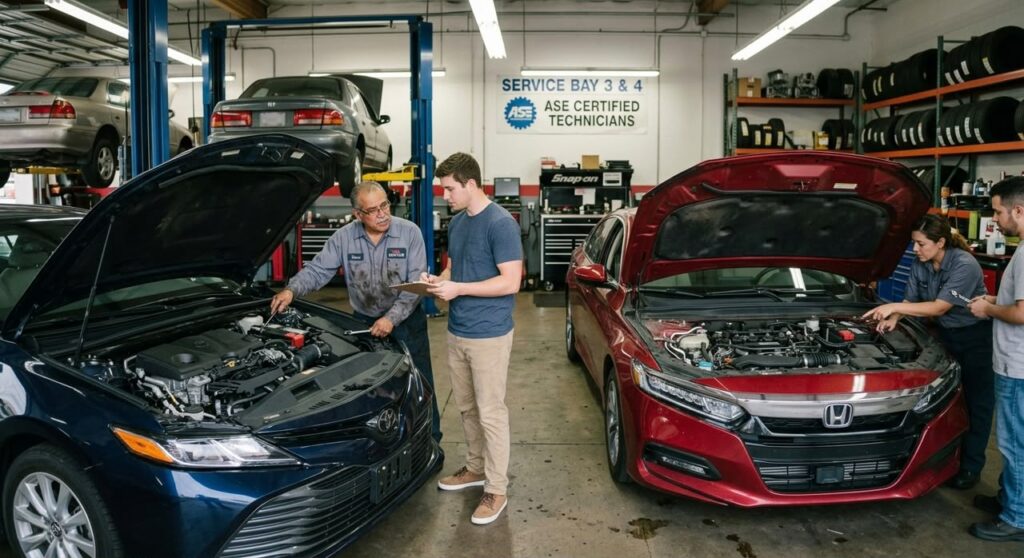
Top 5 Factors for Understanding Reliability for Honda vs. Toyota in 2026
- Reliability toyota vs honda focus on high quality builds and use of high grade materials sets the stage for longer reliability. Both brands have high tensile steel and reliable components for the 2026 models.
- The ease and cost of repairs are influenced by manufacturer maintained networks. Toyota has a better maintained network, giving them an edge in reliability assessments.
- There are a few factors after purchase that influence reliability. Cars that are exported from a country without inspection may face climate issues in the country of export.
- Current hybrid designs are less tested, but rapidly improving. Due to reliance on unsafe testing, Toyota has the edge in hybrid reliability.
- In the testing and technology improvements for greater safety and reliability of the vehicles, both brands rely on risky testing prior to launch. However, Toyota has the edge in published long duration testing.
Top 5 Professional Practices
- Keeping your vehicle in compliance with Japanese domestic standards requires consistent upkeep. Japan has a reputation for providing some of the most rigorous schedules for vehicle maintenance. Observing Japanese standards extends vehicle longevity.
- Checking engine oil and the hybrid system at intervals of 5,000 KM helps reduce the size of potential issues. Hybrid batteries need both the fluid check and periodic calibrations.
- Vehicle performance as designed by the manufacturer is preserved by the use of authentic OEM parts. Though they may appear cost-efficient, aftermarket components adversely affect long-term vehicle reliability.
- Next Drive-certified professionals conduct pre-inspections for export ensuring certifying that the vehicle is ready to road. Their thorough assessment examines engine health, body condition, and the function of the hybrid system.
- Reliability documentation that is data-based provides customers with the confidence of knowing the assessment history of the vehicle. Every exported vehicle should be documented for an up-to-date maintenance record and inspection.
Top 5 Mistakes by Novice Buyers
Not checking maintenance history prior to a purchase is the most common mistake made by novice vehicle buyers. When buying used exports, be sure to request a complete service record.
Neglecting hybrid diagnostics is likely to result in expensive repairs. The purchase of a used hybrid vehicle in 2026 is subject to a hybrid battery assessment.
Failing to obtain export certification is evidence that buyers have not protected their own interests. Be certain that the vehicle is issued a valid export certificate by an authorized exporter.
Engine wear is a result of not understanding the appropriate fuel grade. Japanese domestic vehicles require specific octane ratings, which may not be the same as other regions.
Purchasing based purely on cost and overlooking factors such as reliability will leave you with a burden down the line. The cheaper vehicle with a low Reliability toyota vs honda score ends up costing more in repairs after a few years.
Professional Expertise and Industry Authority
Japan also has some of the most sophisticated testing systems for cars. In Japan, all cars must go through a government safety and emissions test before they are sold. This is a rule for both honda vs toyota reliability.
Next Drive inspectors have years of experience working firsthand with Japanese domestic cars. The team includes people with backgrounds in automotive engineering and export compliance. Many have worked with Toyota and Honda dealerships in Japan.
When selecting an export partner, industry certifications are important. Next Drive has recognized certifications in vehicle export and inspection. Their history includes thousands of shipments with over 30 countries. This expertise makes them the go-to for Toyota vs. Honda reliability 2026 data.
Example: 2026 Toyota RAV4 Exported to Malaysia via Next Drive
A buyer in Malaysia purchased a 2026 Toyota RAV4 through Next Drive in 2026. The vehicle was inspected, certified, and exported from the Nagoya dealership. The buyer drove the vehicle in a hot and humid tropical climate.
The only concern was the performance of the hybrid battery and the heat. Toyota’s system to manage the temperature, handled the heat for the entire year. After a year of being used daily, the vehicle only lost 2% of its hybrid performance.
The buyer reported no mechanical problems and just one serviced appointment. Fuel consumption was consistent with Japan’s domestic ratings. This case demonstrates Toyota’s hybrid systems reliability, even in demanding climates.
Expert Insights and Professional Observations
One outdated misconception is hybrid cars operate with much greater mechanical strain than conventional cars, thus are less durable. New systems are designed to minimize strain and are, therefore, more reliable.
An expert tip from automotive professionals: reliability improves with consistent hybrid calibration. Skipping calibration services leads to deterioration. Buyers should have hybrid systems checked every 10,000 km or once a year.
One of the key observations from global resale markets is used Toyota cars have a much longer sales life and higher resale value. This trend is evident in Africa, Southeast Asia, and The Middle East. It demonstrates the extensive buying confidence due to decades of trustworthy operation.
Verified Data, Facts, and Evidence
According to the 2026 reliability rankings by J.D. Power, Toyota is ranked as one of the top three most reliable car manufacturers in the world. Honda ranks in the top five and scores stronger and more consistently across all ranking categories when compared to Honda.
Next Drive export analytics from Tokyo and Nagoya reveal that Toyota makes up 58% of total exports. Honda makes up 32% and is showing increasing exports annually.
Fact Check Summary: In 2026, Toyota is ranked top three for reliability, while Honda ranks just below. Compared to long-term reliability, both brands outperform most American and European competitors.
- Brand, J.D. Power 2026 Ranking, Problems per 100 Cars, Avg. Resale Value after 3 years
- Toyota, Top 3 Worldwide, 142, 78% of original price
- Honda, Top 5 Worldwide, 163, 74% of original price
- Industry Avg., —, 190, 65% of original price
Risks and Limitations
Export pricing may result in changes to the final price of your vehicle due to fluctuations in the JPY – USD exchange rate that may shift the price range by hundreds of dollars per month. Hybrid battery degradation can occur if the vehicle is not used for long periods. It is advisable to inquire the usage history of a vehicle before buying a used hybrid. Exporting a vehicle may also subject it to different regional service and reliability conditions. A vehicle that operates reliably in Japan is also likely to encounter a different set of challenges in a hot, humid or dusty environment. Buyers should anticipate changing the frequency and scope of maintenance.
Note: Reliability depends on driver behavior, local weather, and availability of services. This is general market data and will not evaluate the performance of a single vehicle.
FAQ
Will 2026 be Toyota’s most reliable year?
Yes, based on the long-term durability and failure statistics, Toyota vehicles have an advantage over Honda vehicles.
Which lasts longer between Honda and Toyota?
The ownership data from all over the globe shows that Toyota model vehicles last longer. Many Toyota model vehicles have their engines in good condition after 300,000 km, given that they have been maintained routinely.
Which is better between Honda and Toyota in terms of vehicle maintenance and management costs?
The costs of maintaining the two brands are relatively equal in Japan. In the markets outside Japan, the maintenance costs of Honda vehicles is slightly more expensive because the spare parts for Toyota vehicles are more readily available.
Which is better between Honda and Toyota?
Toyota has fewer problems than Honda. J.D. Power (2026) shows that Toyota has fewer problems per 100 vehicles. While Honda does perform better in that aspect compared to the rest of the world vehicle brands.
In terms of long-term investment and ownership experience, which brand is better between Toyota and Honda?
Toyota is a better long-term ownership brand, thanks to reliability and resale value. If you want sporty and fun driving experience and reliability, Honda is a good option.
Are Honda and Toyota hybrids equally good?
Honda hybrids are a good vehicle but don’t have the track record that Toyota is able to demonstrate. Plus, Toyota has the advantage of experience when it comes to building hybrid vehicles.
Which is better after 100,000 miles, honda vs toyota reliability?
When it comes to reliability, studies suggest Toyota performs better than Honda after 100,000 miles. Honda also performs well, but its scores usually indicate higher maintenance needs, compared to Toyota.
Which brand has better resale value, Toyota or Honda?
In most global markets, Toyota tends to have better resale value than Honda. However, in Africa and Middle Eastern countries, Honda resale value is slightly better than in other markets and closely trails Toyota.
Which is more reliable: the 2026 Toyota RAV4 or the 2026 Honda CR-V?
In the reliability competition, the 2026 RAV4 ranks a little higher. However, the 2026 Honda CR-V Sport Touring comes a little too close for comfort, with great driving range and superior ride comfort.
Are 2026 Toyotas reliable after the latest redesigns?
Yes. The 2026 line of vehicles from Toyota continues to rate well in reliability, even after the redesigns. First reviews and the latest data from J.D. also suggest no issues with the latest builds.
Conclusion
When it comes to the reliability debate of Toyota vs Honda Reliability 2026, Toyota wins in the longevity and resale value categories. Honda also performs well with the comfort and price. Both brands are great for customers who like to hold onto their vehicles for the long haul.
Both Honda and Toyota are at the top of their game, each with their pros and cons. Sporty design and innovative engineering are Honda’s strong suits, while reliable and efficient vehicles from Toyota are industry leaders and hard to beat. The final victor comes down to preferences and what you value most in a vehicle.