



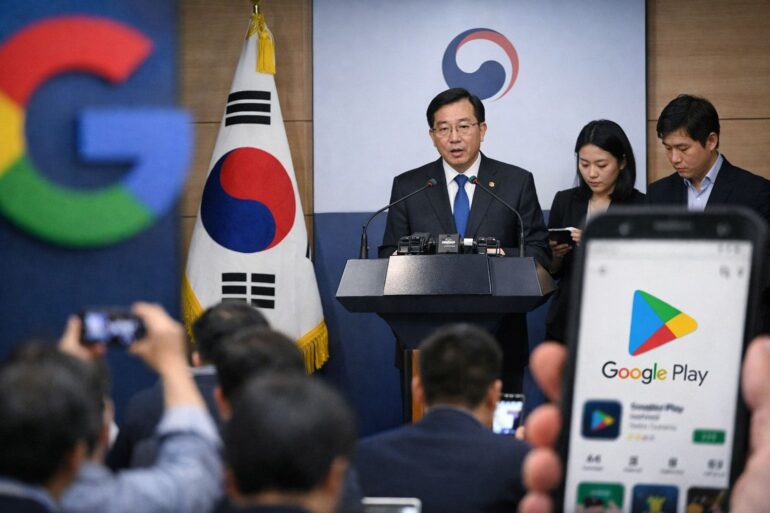
South Korea Accuses Google of Violating Anti-monopoly Laws regarding App Store Injustice
With another antitrust case against it, Google now has a challenge from the South Korean Fair Trade Commission (KFTC). Accusations state that Google is distorting competition by monopolizing the Android app store and is providing financial support to app developers to support Google Play.
According to South Korean regulators, Google created policies that provided additional motivation to mobile game developers to host their games on Google Play under the same or more favorable terms as the other competing app stores. KFTC argues these policies directly lead to the reduction of competition and the further monopolization of the Android app distribution by Google.
This new case is another antitrust case among the increasing regulatory pressures Google is facing from the United States, Europe, and now Asia.
What has South Korea accused Google of?
In the KFTC report, Google paid developers and provided other financial benefits for hosting their games on Google Play
Developers were left with limited options outside of Google Play. Regulations have been implemented to prevent app stores from vying for the attention of developers and users.
This case has negatively impacted South Korea’s OneStore, its local app store, which has been working to get users on South Africa’s Android. South Korean officials have expressed concern that Google has broken the law in the market by using its monopolistic position.
Competition in Android App Store Market
While Android is widely regarded as a platform, Google Play is still the dominant app store in the ecosystem.
Since Google Play is pre-installed in the majority of Android devices, alternative app stores find it hard to get users and developers.
Regulators in different countries recently have scrutinized the way Google manages its app store, the developer policies, and the app publishing requirements.
South Korea is yet another example of Google’s ongoing battle with antitrust claims regarding its app store, but it also encompasses Google’s search, online advertisements, cloud services and the entire mobile ecosystem including Google Play and Android.
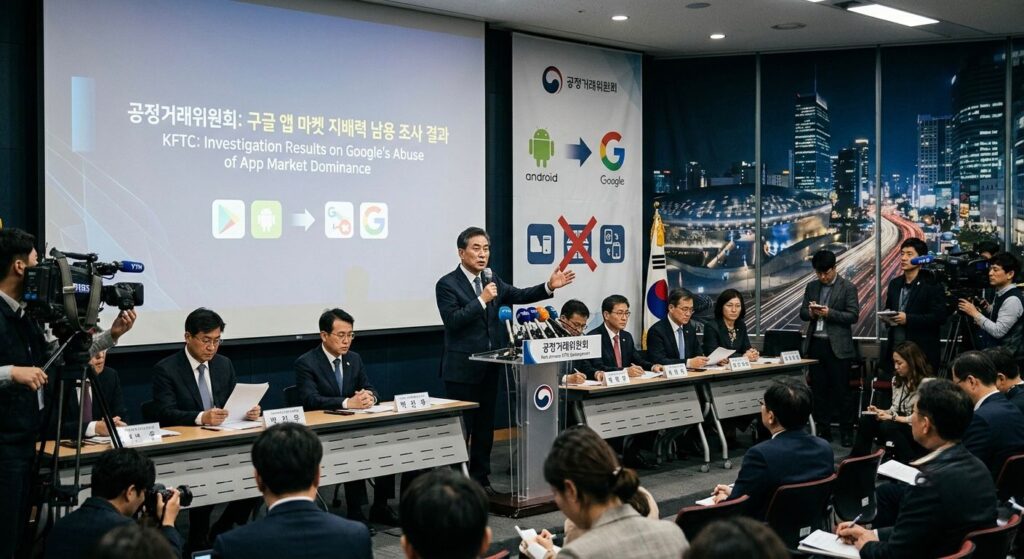
Google’s potential financial exposure is large
If the antitrust laws are found to be violated by the Korea Fair Trade Commission, huge financial consequences for Google will result. The Korea Fair Trade Commission has authority to impose a fine of 6 percent of the net sales for the relevant market.
It will be possible to make the way Google manages the Google Play Store, and its developer policies and business practices, more fair. The ruling will also make Google conduct business fairly in other countries.
Impacts on Google?
South Korea’s trend extends beyond its local market.
Google has faced several investigations due to antitrust complaints around the world. First the EU, then the US, the KFTC, and now the South. Most of these complaints deal with the case of Google abusing its market dominance to stifle competition and promote its own services.
If Google is found to be in violation of the law by the KFTC, this will be yet another case that shows the increasing global concerns about Big Tech.
Whats the Impact for App Developers?
This will also have an impact on game and app developers.
If Google Play has to follow the KFTC’s ruling, that will make it easier for developers to publish their apps on other app stores.
This will probably result in the following:
- – All app stores will be easier and cheaper to use
- – All app stores will provide more options
- – Better services as a result of app store competition
- – Developers will rely less on a single app store
Sooner or later, all developers and users will benefit from improved competition and great services.
Continued Global Pressure on Big Tech
The case in South Korea is part of a growing global effort by government authorities and International law to decrease the power and control of Big Tech.
For several years, the big 5 tech companies have been investigated and sued for:
- Monopolization
- Control of app stores
- Digital Ads
- Cloud Services
- AI
- User Privacy
It is evident that within the next few years, technology regulation will have a huge impact on the digital industry.
Conclusion
With the new accusations against Google by the South Korean Fair Trade Commission, we enter a new phase of the global regulation vs big tech struggle.
While Google has contested these allegations and no conclusion has been drawn, it is likely this will change how Google Play is run, and the restrictions he puts on the Marketplace.
While Antitrust legislation is being adopted by more countries, tech companies will have to balance the growth and innovation of their company with the restrictions of competition laws. This will dictate the future of the mobile app and digital economy.