



Il Lanificio’s premium artisans’ wool sweaters are a great long term investment as an example of a quality product. However, they are still a living material and require a certain standard of care. A cashmere turtleneck may look beautiful and soft, but may be turned into a useless piece of felt with one how to wash wool sweater .
This guide will take you through all aspects of wool care. This includes the chemistry of detergents, the best drying methods, ways to protect your wool garments, and external care.
What Causes Wool to Felt?
To understand proper care methods, it is important to understand what cause wool to felt. how to wash wool sweater contains keratin and its fibers are covered with tiny scales. However, when excessive heat, moisture, and friction are combined, these scales will lift and lock into one another (similar to the locking of a zipper) and cause felting.
Once wool fibers have locked, they cannot be undone. For this reason, Il Lanificio believes in not “cleaning” wool garments, but rather “preserving.” Below are some practices that will cause irreversible damage to your wool garments:
- Thermal Shock: moving wool from a hot to cold water wash will cause fibers to rapidly contract.
- Agitation: rubbing a stain to remove it disrupts the structure of the wool fibers.
- Alkaline Detergents: The pH level in most soaps is too high and removes wool’s natural oils (lanolin). As a result, wool fabric becomes dry and scratchy.
How to wash a wool sweater
The safest method to wash the finest wool garments (including Extra Fine Merino and Cashmere) is to wash them by hand even though some modern washing machines include cycles that are certified by “Woolmark”.
The Preparation
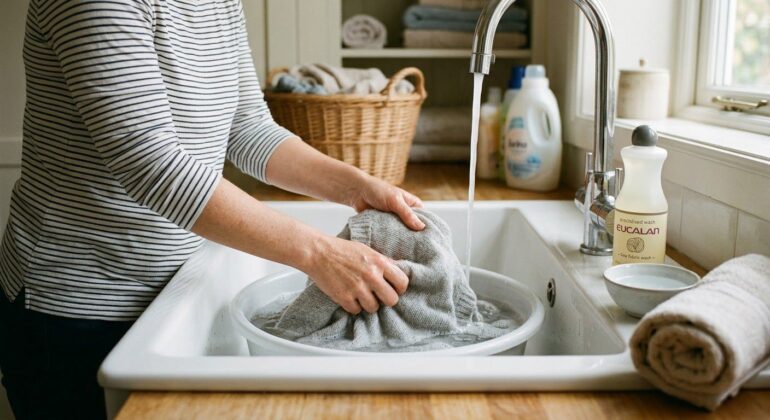
Fill a sink or tub with lukewarm water that is not above 30°C (or what feels to you almost cool). Add 1 tablespoon of special wool detergent (it is very important that the soap is completely dissolved before the garment is submerged) to the water and let the soap dissolve.
Immersion and Movement
In the case of how to wash a wool sweater do not rub, only submerge, and then, using a softened as the “bread” of the soap penetration, sheet movement, let the garment soak for a maximum of 10-15 minutes.
The Rinse
To keep the temperature of the water consistent, completely discard the soapy water and then repeat the refill to the exact same temperature water to continue rinsing until the water runs clear. For this and all subsequent rinses, adding 1 tablespoon of white vinegar is suggested to enhance pH, and preserve the brightness in color.
Machine Washing Wool
For harder wool garments, especially those of daily use/span> wool garments, this method is more acceptable.
- The Program: Select only the “how to wash wool sweater” or “Delicates” program. These cycles reduce mechanical action as the drum rocks or cradles instead of spinning.
- The Protection: Always put your Il Lanificio sweater in a mesh laundry bag. This stops it from hitting the drum or having other garments create pulls in the yarn.
- The Spin Cycle: This must be set to the minimum (maximum 400-600 RPM) or completely off. A powerful spin cycle causes most of the issues of stretched and misshapen sleeves and shoulders.
Merino wool or traditional wool? Differences and advantages
Drying Wool: The Critical Moment
This is where most men go wrong. A wet sweater can weigh up to three times its original weight. The fibers stretch permanently when it’s hung on a hanger.
The Towel Method
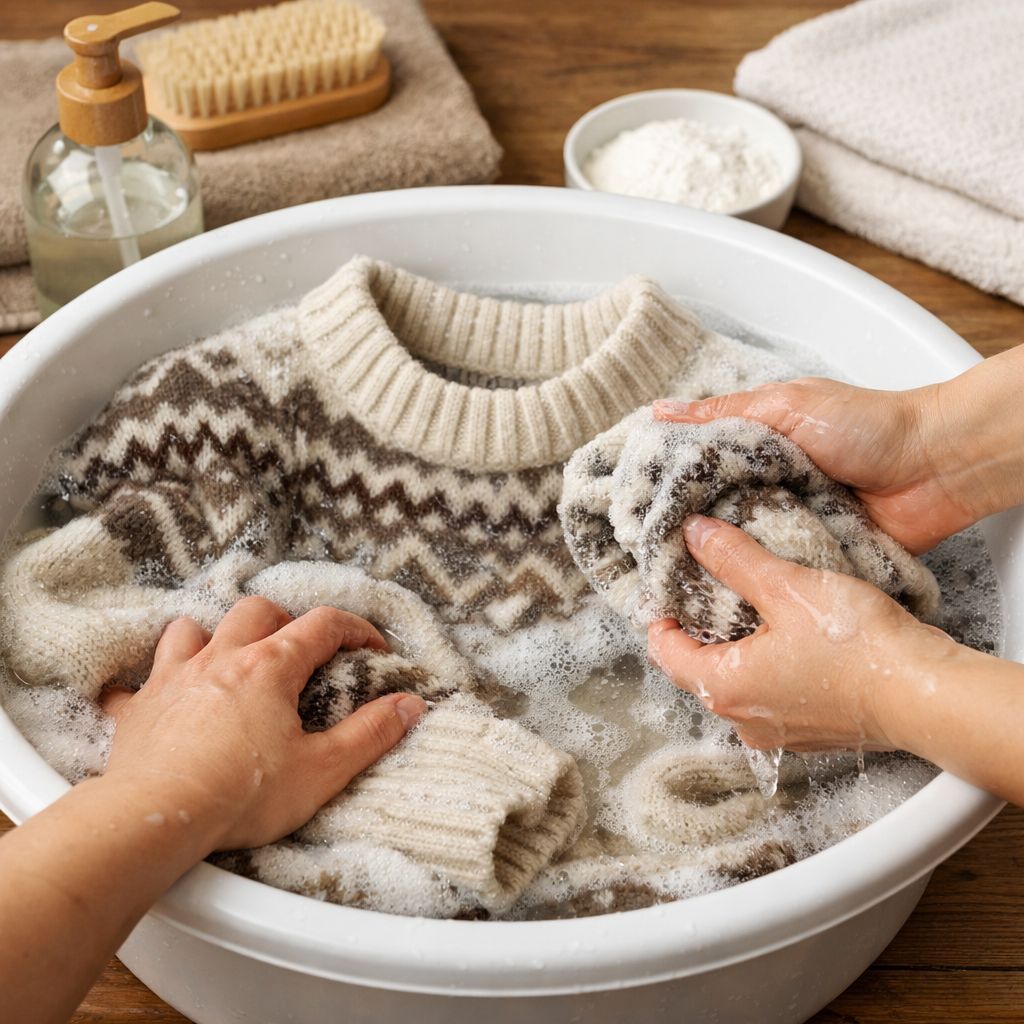
After rinsing, lay the sweater on a white towel. Roll up the towel with the sweater, and press with your hands to absorb the excess water. This is the only way to remove the water. Never twisting or wring the sweater.
Flat and in the Shade
To fully dry, unroll the sweater, and reshape it (blocking). Let it dry flat on a drying rack. Avoid radiators. Never direct sunlight. This can ruin the fibers and stretch the design.
Seasonal Storage: Protecting the Investment
How you store your sweaters after the cold season ends will determine whether you find your sweaters in good condition the following cold season.
Preventive Cleaning
You should never pack away a “used” sweater, even if it does not appear visibly dirty. It likely contains remnants of your skin, mucous, or food, and moths cannot resist it. Garments should always be washed before being placed in storage.
Folding vs. Hanging
As stated before, hangers ruin knitwear. Sweaters should be folded along with a sheet of tissue paper placed in between to help prevent the fibers from being compressed.
Moth Defense
Mothballs should be avoided as they leave a permanent smell. Opt out for refined, natural replacements.
- Cedarwood: red cedar can be effective, but they should be lightly sanded every year to refresh the essential oil.
- Lavender and Cloves: provide protection while also providing a fresh, clean scent.
- Breathable Bags: use fabric or cotton garment bags, and NEVER plastic. Wool must “breathe” while in storage. Plastic bags can trap moisture and promote mold.
Small Secrets for Wool Maintenance
To maintain a classic look, like those from Il Lanificio, frequent washes are not required and in fact, should be avoided.
- Airing Out: after use, place your sweater on a chair for an hour near an open window. Wool has the ability to regenerate its structure and will release odors while doing so.
- Steaming: To remove creases from your sweater, avoid any direct contact between the iron and the sweater’s wool fibers. You can either use vertical steam, or, if using a wool pad, place a damp cotton cloth between the iron and the wool. Moist heat relaxes creased fibers without flattening.
- Pilling: The small fuzzballs that appear on the surface of wool after a period of use (pilling) is a natural event that occurs as fine fibers shed excess short fibers. Pilling is not an indicator of the quality of wool. Pilling can be removed very gently, using a specific wool comb or a high quality, gentle electric fabric shaver.
Throughout the years, the use of stylish how to wash wool sweater has remained. Caring for them not only allows the story of style to continue, but is a mark of respect to the craftsmanship that created the garment. If you follow these instructions, the creations of Il Lanificio will be your go to for years to come.