



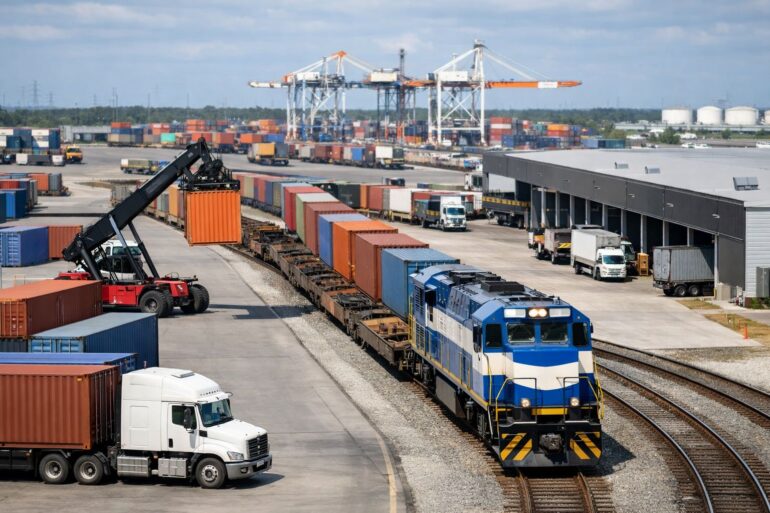
These four private companies have decided to build PFTs as part of the multi-modal logistic parks along the Dedicated Freight Corridors (DFCs). To strengthen the PM Gati Shakti initiatives, the development of 14 Private Freight Terminal (PFT) located on the Dedicated Freight Corridors has been estimated to cost Rs 2,800 crore.
Adani Ports and Special Economic Zones, SKN Haryana City Gas Distribution, International Cargo Terminals and Infrastructures, and ICTIPL have also decided to construct PFTs along the DFCs. After finalizing the locations along the freight corridors, construction of the 14 private freight terminals is expected to be completed in the near future, the DFCC official said. These companies will be granted the rights for exclusive operations in these 14 terminals for five years.
Private Freight Terminal
The official said that eight terminals have been made operational, while 14 are being constructed. The entire Dedicated Freight Corridor will have 42 freight terminals.
The current operational stretch of the corridor is almost 1,000 km, and the entire system is expected to be operational by 2023. PFTs offer the customer seamless and highly efficient business services, including fully automated cargo handling terminal services.
“We will come out with a Time Table for our freight operations soon, which should not only bring comfort to our customers but also make it possible to deliver goods to the destination at the scheduled time”, the official added. Cargo business is the main stay of DFC and establishment of private terminals is expected to enhance loadings. Now, it takes half the time to transport goods, as freight train speeds have almost doubled.
Costs will be reduced and savings will be realized.
These benefits will optimize the supply chain for the industries and logistics players. Faster freight transport will enhance the industrial development of the townships along the corridor.
A freight terminal is a cargo terminal. Cargo is usually transferred to more than one transport mode, processed, and distributed at a freight terminal.
According to UNCTAD, the amount of maritime cargo has increased to more than 11 billion in a short time of 20 years. As cargo transport increases, so do delays. Dealing with a complex global supply chain means shippers will have to deal with a delay at one terminal. Shippers need to understand the inner workings of transit systems.
Four Types of Freight Terminals
Freight terminal differ depending on the type of cargo or the transport mode they connect. Some terminals may handle only one transport mode. Intermodal terminals, however, may process several transport modes in a single facility. This gives shippers more flexibility in routing. Knowledge of the type of terminal your shipment requires will help you avoid time-consuming and expensive detours and delays.
Truck Terminals
The most widely used freight terminal is the truck terminal, which is the final consolidation point of the freight shipment, whether it is a short-haul or long-haul shipment.
In a truck terminal, freight from different origins is unloaded, sorted, and then loaded onto trucks for final delivery to the destination. Due to the high movement of trucks, these terminals are located near highways or urban centers to facilitate quick distribution.
Rail Terminals
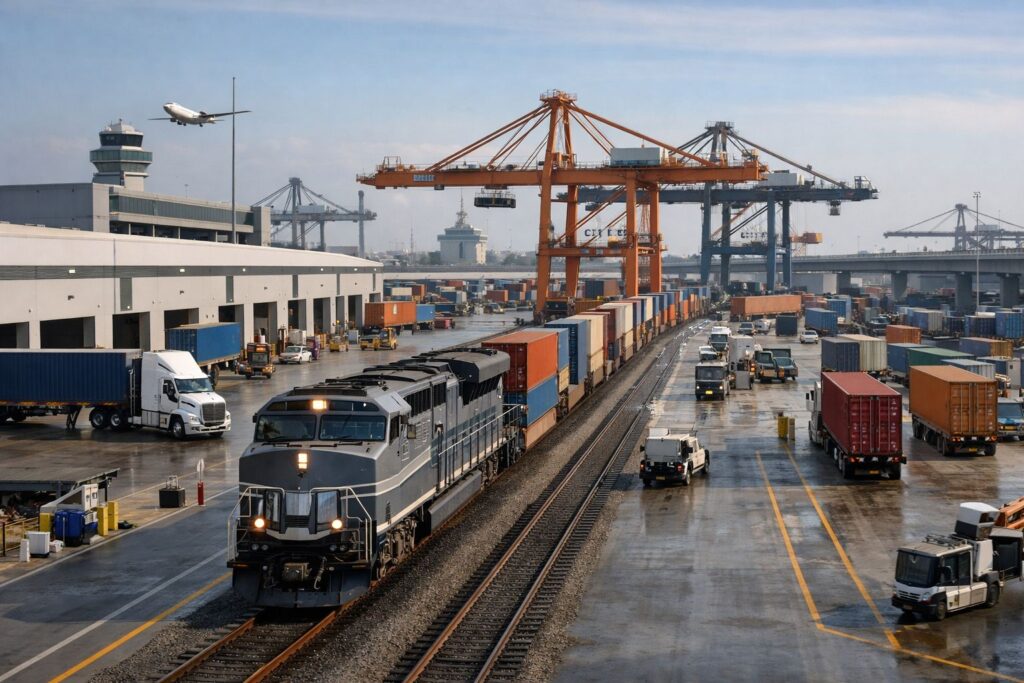
Rail terminals are used to load or unload freight from trains in the rail transport system. They are equipped with cranes and loading docks, as well as storage for freight that is transported in bulk.
Rail freight is more efficient for transporting large quantities of raw materials (i.e. grain, coal, lumber, and industrial chemicals) than trucking. A single freight train is the equivalent of 280 truckloads, making rail terminals invaluable for the heaviest or highest-volume shipments. Rail terminals are commonly used by shippers as a mid-point to connect ocean freight to inland destinations hundreds of miles away.
Air Terminals
Air terminals are located in airports and handle shipments that are transported by air. Typical air freight consists of high-value, time-sensitive, or perishable shipments. These terminals need various special appliances. Cold storage for perishables and pharmaceuticals. X-ray scanners, along with security screening, are for ice processes. Luxury goods and high-value electronics will pass through restricted-access zones.
Air terminals need to operate quickly since cargo planes have strict departure times. The faster the goods are processed through the terminal, the faster they are delivered.
Marine Terminals
Marine terminals deal with freight that is transported via the ocean. When one means ‘port terminals’ this refers to the marine terminals that are a part of the larger port facilities. Shipping’s largest container ships dock conveniently at marine terminals. Bulk movement of shipping containers is facilitated via heavy lifting cranes. Loading and unloading is accomplished via Trailers and straddle carriers which transport the containers to and from terminal storage yards, and to the truck and rail connections. Other specialized zones are maintained for hazardous materials and perishable goods at marine terminals.
Since they are the entry point of most international trade, marine terminals control the entire trade supply chain. Delays in a marine terminal will cause delays at the terminal’s shipping trucks, and terminal meeting trains, and at all subsequent warehouses.
Centralized Coordination
There are three main reasons freight terminals are a great asset to modern logistics; they centralize coordination, speed up cargo, and offer real-time visibility.
This type of centralization is extremely critical, because shipping issues always extend beyond a single point in the supply chain. For instance, damaged packaging, customs issues, and lost documents require immediate contact to several different parties. When different companies operate from the same physical location, it makes resolving issues easier and faster. Foresmart’s door-to-door freight services require this type of coordination. Every step from pick-up to integration, whether ocean or air freight, customs clearance, and the final-mile delivery all occur in a terminal. In this case, time and communication influence the result of the service.
Terminal freight services are designed to keep cargo moving and minimize the amount of time anything spends standing still. Because of this, the average length of time goods take to travel one leg of the journey is reduced from days to hours.
Heavy-duty cranes and freight packaging systems are just a few pieces of specialized automated systems that make this possible. These systems perform the work of an entire human labor crew but within minutes or hours as opposed to days.
Freight terminal require a system of layered security as compared to previous systems of cargo security. Tracking cargo is done through a combination of surveillance, GPS systems, and electronic records that allow an instant inventory of all items in a freight terminal. This system of security ensures that the loss, theft, damage, or misrouting of goods is virtually eliminated.
Neglecting Terminal Capacity During Busy Seasons
During the busy holiday season and year-end, terminals become overcapacity. Carnage can be lost if space is not booked in advance as there is not space in outbound vessels and trucks to transport cargo from the terminal to a different location. Sending cargo at the last minute can result in additional costs, lost time, and more stress to shippers.
Bypassing Customs Procedures
If documents and clearance procedures are not done, cargo will be stuck at the terminal as customs will have to conduct a physical check. Freight forwarders will do customs clearance and preparation, and most will do a pre-check for customs clearance and terminal cargo to avoid delays of 2 to 5 days, which can cause storage costs.
Conclusion
Every cargo shipment has to go through a Private Freight Terminal and which one the cargo goes through, and which logistics provider you use, and which documents you complete, will determine if your cargo will be delayed. For shippers who source from China, Foresmart handles the complete logistics of freight from picking up the shipment from the supplier all the way to the final delivery after crossing customs, both air and ocean freight.